
One of the most common sources of friction in B2B video production is misaligned expectations about timing. A client expects two weeks, the agency needs five. Understanding what happens at each stage — and why — makes the process significantly smoother for everyone involved.
The four stages of B2B video production
Every professional B2B video production, regardless of format or budget, goes through four stages: briefing and pre-production, filming or animation production, post-production and delivery. The timeline for each varies significantly depending on the complexity of the project and the responsiveness of the people involved.
Stage 1 — Briefing and pre-production (1–3 weeks)
Pre-production is the most important stage and the one most frequently underestimated by clients. It covers everything that needs to happen before a camera is turned on or an animation frame is drawn.
The briefing session (typically one to two hours) is where the production company understands the company, the audience, the message and the distribution plan. From the brief, the production company develops a script — usually requiring two to three rounds of feedback before it is approved. For testimonial videos, pre-production also covers the preparation of interview questions and the coordination of the filming day logistics: location, interviewees, crew access and permissions if needed.
Pre-production typically takes one to two weeks for a standard corporate or testimonial production. For animated explainers, it takes slightly longer because the storyboard and visual style also need to be developed and approved before production begins.
Stage 2 — Filming or animation production (1 day to 2 weeks)
For filmed productions — corporate videos, testimonials, filmación corporativa — the production stage is typically one or two days of filming. The filming day itself is fast; what makes it go smoothly is the quality of the preparation done in stage one.
For animated productions — 2D animation, motion graphics, explainer videos — the production stage takes longer: typically one to three weeks depending on the complexity and volume of animation required. This is the stage where the storyboard approved in pre-production comes to life as moving images.
Stage 3 — Post-production (1–3 weeks)
Post-production covers editing, colour grading, sound design, music, motion graphics and any voiceover recording. For a standard one-day filmed production, a skilled editor typically delivers a first cut within five to seven business days.
The feedback and revision process is where timelines most frequently slip. Two rounds of revision are standard; each round adds three to five business days to the timeline. Clear, consolidated feedback — all notes in one document rather than drip-fed over multiple emails — keeps this stage on track.
Stage 4 — Final delivery (2–5 days)
Final delivery covers the export and formatting of all agreed versions: horizontal for web and YouTube, square for LinkedIn, vertical for Instagram stories, subtitled versions for autoplay without sound, and any language adaptations. Planning all formats at the start of the project avoids last-minute requests that extend the timeline.
Realistic total timelines
A standard corporate or testimonial video — one filming day, one language, standard post-production — takes three to five weeks from first briefing to final delivery. An animated explainer video takes four to seven weeks. Productions with multiple filming locations, multiple languages or more complex animation can take eight to twelve weeks.
The biggest variable in any timeline is not the production company — it is the speed at which the client provides feedback and approvals. A client who responds to a script within 24 hours will receive their video weeks earlier than one who takes two weeks to review each draft.
How to keep your video production project on schedule
Assign a single internal point of contact who has authority to approve at each stage. Agree on response times for each review before the project starts. Consolidate all feedback in one document rather than sending notes from multiple stakeholders in separate emails. Approve the script completely before filming — changes after filming day are expensive.
Frequently asked questions about B2B video production timelines
Can you produce a video in less than two weeks?
For simple productions where the brief is clear and the client can approve quickly, two weeks is achievable. It requires fast-tracking pre-production and post-production simultaneously and prioritising the project above other work in the agency’s queue. Rush fees typically apply for timelines under three weeks.
What causes the most delays in video production projects?
Slow script approval, feedback from multiple stakeholders that contradicts itself and last-minute changes to the brief after filming has started. All three are entirely avoidable with clear project management at the start of the engagement.
How long does animation production take compared to filmed production?
Animation takes longer overall — typically five to eight weeks versus three to five weeks for filmed production — because the visual style, storyboard and character design all need approval before animation begins. However, animation avoids the logistical complexity of coordinating filming days and interviewees.
What is the minimum lead time I should plan for a video I need for a specific date?
Add one week to your expected timeline as a buffer and work backwards from your deadline. For a video needed on a specific date, start the production process at least six weeks in advance for filmed content and eight weeks for animation.
Ve un ejemplo real
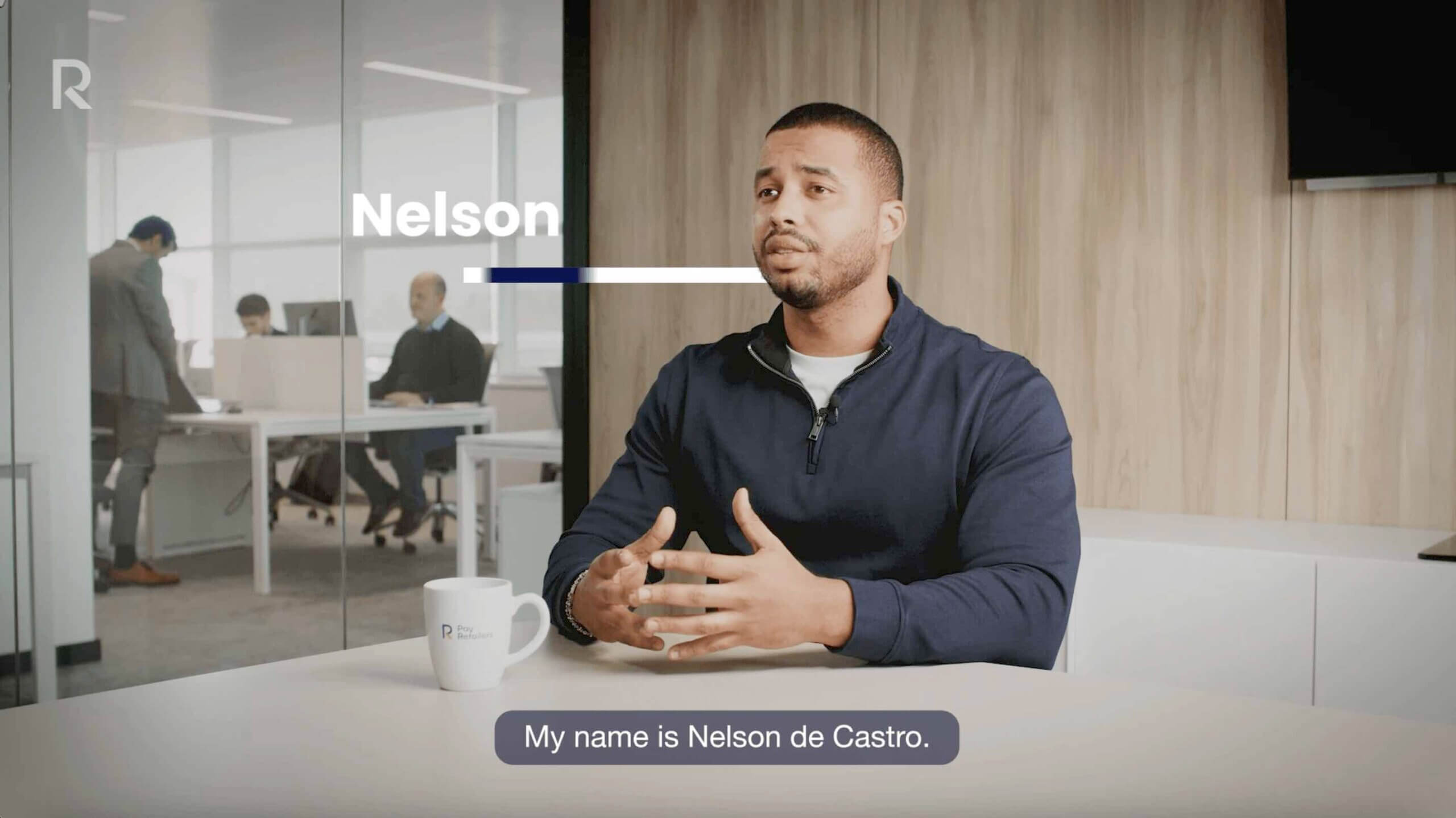
PayRetailers — corporate video produced by Storisell
Casos de éxito
Hotjar — Explainer Video B2B
Hotjar produced their animated explainer video with Storisell on a standard five-week timeline. Pre-production covered the script and storyboard; animation production and delivery were completed within the agreed dates. The video is used on their product page and in sales outreach.
Klarna — 2D Animation Fintech
Klarna produced a 2D animated explainer for distribution across ten European markets. The production timeline included multilingual versions in four languages, completed within eight weeks from first briefing to final delivery.
How to brief a video production project for maximum efficiency
The quality of the brief you give your production agency directly determines how much of the timeline is spent in revision cycles. A comprehensive brief at the start of the project — covering the commercial objective, the audience, the single main message, the distribution channels and all format requirements — typically reduces total production time by 30 to 40 percent compared to an ambiguous brief that requires multiple rounds of clarification.
The most productive briefing format is a two-hour workshop where both the client and the production team actively build the brief together. The client brings knowledge of the business, the audience and the commercial objective. The production team brings knowledge of what works on camera, what formats are required for each channel and what information they need to make good creative decisions. The output is a brief that both sides have built and both sides own.
Common timeline mistakes and how to avoid them
The most frequent timeline mistake is approving the script too quickly without reading it carefully, then requesting significant changes after filming has taken place. Reading a script takes ten minutes. Approving it without reading it and then requesting a reshoot costs thousands of euros and weeks of delay. A simple rule: never approve a script that you have not read aloud yourself. If it sounds unnatural when read aloud, it will sound unnatural on camera.
The second most frequent mistake is involving too many approvers in the post-production feedback process. Each approver who sends separate feedback emails — often contradicting each other — adds days to the revision cycle and introduces confusion into the editing process. Designating one internal decision-maker who consolidates all feedback before sending it to the production team is the single highest-leverage change most companies can make to their video production timeline.
How to accelerate a video production timeline without sacrificing quality
Most production delays are avoidable. The variables that most frequently extend timelines are slow script feedback, unavailable interviewees on filming day and last-minute changes to the brief after production has started. Each of these is a client-side variable, not a production company variable. The production company can only move as fast as the approvals it receives.
The fastest way to accelerate a video production timeline is to assign a single internal decision-maker who has authority to approve at each stage without escalation. Every time a script draft goes to five people for feedback and returns with conflicting notes, the project loses one to two weeks. The client organisations that consistently deliver video projects on schedule are the ones with a single named owner who can say yes at each stage.
A second accelerator is consolidating all feedback in one document per revision round. Feedback dripped over multiple emails forces the production team to manage a moving target. A single consolidated document per round, sent within a defined window, allows the production team to implement everything in one pass and move forward cleanly.
What can go wrong during filming and how professional productions prevent it
Filming days are where months of planning can either come together smoothly or unravel rapidly. The most common filming day problems — interviewees running late, noise interruptions, poor lighting conditions, audio issues — are all predictable and preventable with adequate pre-production.
Interviewee delays are the most frequent cause of compressed filming schedules. A professional production company coordinates a detailed filming schedule with buffer time between each person, confirms all participants the day before and has a contingency plan for each segment. Arriving at filming day without a schedule is arriving without a plan.
Audio issues are the most expensive to fix in post-production. A clean audio recording requires a dedicated sound engineer with a boom microphone or lavalier, separate from the camera operator. Productions that use only the camera built-in microphone consistently produce unusable audio in real office environments. The most common beginner mistake in corporate video production is treating sound as secondary to image — the result is a video that looks professional but sounds amateur, which undermines the entire message.
Managing client expectations throughout the production process
The single biggest source of client dissatisfaction in video production is not the quality of the final video — it is the gap between what the client expected at the start and what they received at the end. Closing that gap is primarily a communication problem, not a production problem.
Setting expectations correctly at the start means being explicit about what is and is not included in the timeline, what the revision process covers, what happens when filming day runs over schedule and what the consequences of late approvals are. A production company that is transparent about these constraints from the start has far fewer difficult conversations than one that makes every project sound straightforward until a problem arises.
The most effective expectation-management tool is a shared project timeline — a simple document or calendar that shows every milestone, every approval deadline and every deliverable date. When both parties can see the same timeline and both have agreed to the deadlines, the conversation shifts from «why is this late» to «what needs to happen by Thursday to keep this on track».
¿Listo para producir tu vídeo?
Más de 350 empresas B2B tecnológicas confían en Storisell para sus vídeos testimoniales y explicativos.
Descarga nuestros precios →